
This year 2018 has been marked by interesting discoveries and advances in different science fields. This list includes some that I find important enough to mention in this scientific closing post of the year:
THE ROSEHIP NEURON
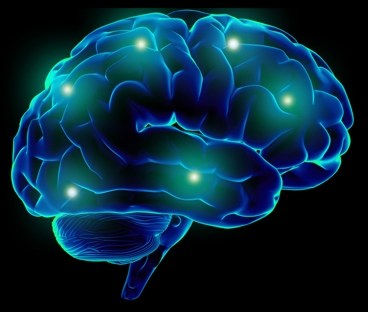
“We don’t yet understand what these cells might be doing in the human brain, but their absence in the mouse points to how difficult it is to model human brain diseases in laboratory animals,” said co-lead author Dr. Gábor Tamás, a neuroscientist at the University of Szeged in Hungary. The results appear in the journal Nature Neuroscience

MEDICINE NOBEL PRIZE ON CANCER RESEARCH
Dr James P. Allison and Dr Tasuku Honjo discovery on T-Cells checkpoint in cancer research, makes history in the world of medicine and physiology. This is why they were awarded the Nobel Prize in these fields. Their work into the utilisation of the body’s immune system for fighting certain types of cancer could potentially save the lives of thousands around the world.

HARVESTING LETTUCE IN THE ANTARCTIC
German scientist Paul Zabel developed an artificial greenhouse that could make harvesting produce a reality for those in the Antarctic.
The greenhouse, which was installed and began producing early this year, is housed inside a climate-controlled shipping container. With LED lamps, an abundance of carbon dioxide and a nutrient-rich mist, the greenhouse can successfully grow produce without natural sunlight. Plant cultivation technologies

ANCIENT VIRUS RESPONSIBLE FOR HUMAN CONSCIOUSNESS
An ancient virus infected humans long time ago. This invader left behind its genetic code in our DNA. This year, researchers found that snippets of that ancient viral DNA play a vital role in the communication among brain cells that’s required for higher-order thinking. The research reports that the virus planted its genetic print in the human cortex, eventually giving us our consciousness.

The Way To Levitating Humans
The study, published in the Physical Review Letters, describes the new technique, which creates a tornado-like structure that is extremely loud but has a silent core.
The researchers found that when they changed the direction of the rapidly fluctuating acoustic vortices that make up this structure, they could control the rate of rotation and stabilise the tractor beam.
«In the demonstration detailed in the study, the engineers used ultrasonic waves at a pitch of 40kHz to make up the acoustic vortices. The structure’s silent core was able to hold a two-centimeter sphere made out of a synthetic polymer. The sphere is more than two times the size of the acoustic wavelengths, making it the largest object that’s been stably held in a tractor beam thus far» — Reports

SUBSCRIBE TO DR MARTHA
Enter your email address:
Delivered by FeedBurner
[the_ad_placement id=»into-the-content»]
 Dra. Martha Andrea Castro Noriega, MD