Donald Trump recently set the internet on fire—and not in a good way—by posting a deeply bizarre, tone-deaf map on Truth Social. In this delusion-fueled graphic, Mexico, Canada, and Greenland are completely wiped off the map, swallowed whole under the colors of the American flag. No context, no explanation, just pure, unchecked imperialist posturing.
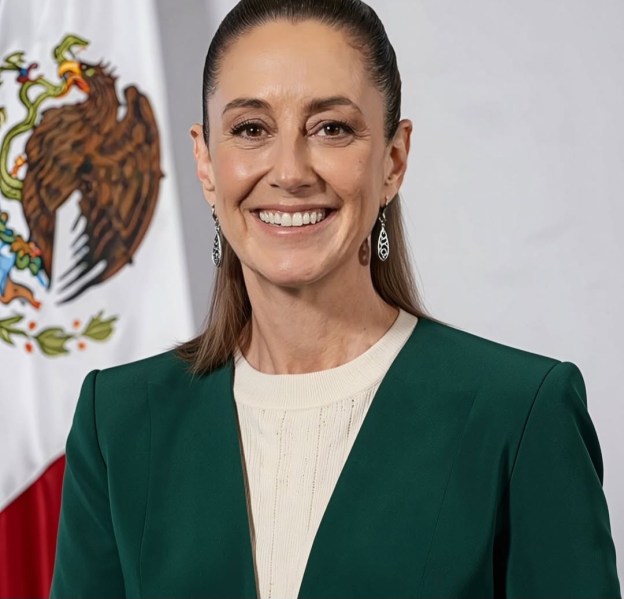
Our beautiful mexican president, Dr. Claudia Sheinbaum Pardo
If it was a joke, no one is laughing. If it was a provocation, it completely backfired.
Mexican President Claudia Sheinbaum didn’t hesitate to shut down the noise. Timing her response perfectly with Mexico’s Independence Month, she fired back with absolute clarity and steel:
“In this patriotic month, we reaffirm that Mexico is not, and will never be, a colony or a protectorate of any foreign country. Proudly, we are a free, independent, and sovereign nation.”
Sheinbaum’s message was a masterclass in dignity and firm leadership. While some choose to play childish games with maps and flags on social media, Mexico stands tall, demanding the basic level of international respect it deserves.
Let’s get one thing clear: Mexico and the United States share history, trade, and culture, but partnership requires mutual respect. Cooperation? Absolutely. Economic synergy? Of course. But subordination? Never.
Erasing borders on a screen doesn’t change reality. Mexico is a powerhouse with a rich history, a vibrant culture, and deeply patriotic people who will always defend their sovereignty. Trump’s map isn’t a strategy—it’s a ridiculous, disrespectful fantasy, and Sheinbaum just reminded the entire world that Palacio Nacional will never bow down to foreign arrogance.
Mexico is free, independent, and sovereign. Period.
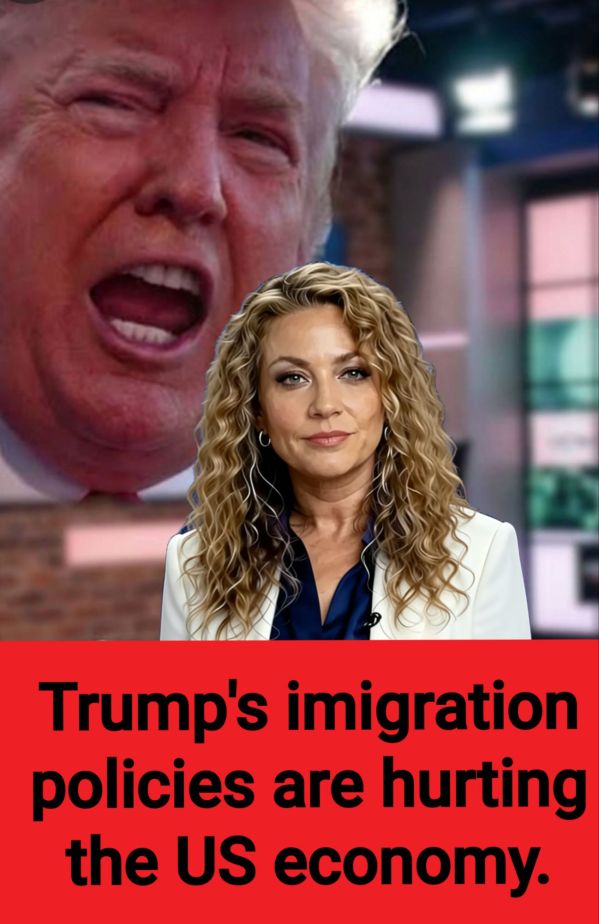
When immigration policy is driven by politics rather than economic reality, the consequences are rarely confined to debate—they are felt directly in the marketplace. Recent economic data and independent studies confirm what many business leaders and analysts have warned for years: aggressive anti-immigration measures are actively undermining U.S. economic stability.
The combination of widespread ICE raids, strict enforcement campaigns, and mounting barriers to legal visas has done far more than alter demographic trends. It has created a self-inflicted blow to two fundamental pillars of economic health: the labor force and consumer confidence.
The Fallacy of a Reduced Workforce: Restricting immigration under the promise of protecting local jobs overlooks a basic market truth: modern supply chains and essential service sectors rely heavily on an international workforce. Shrinking this pool does not automatically create local prosperity; instead, it leaves critical positions unfilled, inflates costs, and slows productivity.
The Invisible Ripple Effect on Spending: An economy thrives when people feel secure enough to participate in it. Heightened restrictions and continuous raids foster an environment of uncertainty that suppresses consumer activity. When entire communities step back from everyday spending, local businesses across all industries feel the strain.
Immigration policy should be designed to strengthen a nation’s future, not choke its economic potential. Securing borders and upholding law are valid priorities, but when enforcement strategies ignore economic interdependence, the price is paid by businesses, consumers, and working families alike.
Join the Conversation
What are your thoughts on the balance between national immigration enforcement and economic stability? Do you see these labor shortages and shifts in spending affecting businesses in your local area?
Leave your comments below—we’d love to hear your perspective!
La líder presidencial de la República Mexicana rindió su segundo informe el día 1 de septiembre de 2026 desde el Patio Central de Palacio Nacional. Ante integrantes del gabinete, gobernadores, legisladores e invitados especiales, la mandataria presentó el balance de las acciones y políticas implementadas durante su segundo año de gestión, destacando la consolidación de la transformación social y económica del país.
Principales Logros a Nivel Nacional
1. Educación: Más Aulas y Universidades para la Juventud
Infraestructura Educativa: Expansión estratégica en la construcción de nuevas preparatorias y planteles de educación superior a lo largo del país.
Consolidación Universitaria: Fortalecimiento del sistema de la Universidad «Rosario Castellanos» y la Universidad de la Salud a nivel federal, ampliando miles de nuevos lugares para estudiantes universitarios.
2. Infraestructura y Construcción de Carreteras
Conectividad Nacional: Avance continuo en la modernización, ampliación y mantenimiento de la red carretera federal y caminos artesanales en zonas rurales.
Proyectos de Transporte: Impulso al desarrollo de vías férreas de pasajeros e infraestructura estratégica para el comercio y la movilidad regional.
3. Fortalecimiento de las Clases Medias y Reducción de la Desigualdad
Movilidad Social: Impulso al consumo interno y la formalidad laboral que ha impulsado la consolidación de las familias de clase media.
Crecimiento Salarial: Incremento sostenido del salario mínimo y del ingreso medio formal, dinamizando la economía familiar y la capacidad de compra.
4. Histórica Baja en los Niveles de Pobreza
Derechos Sociales y Bienestar: Millones de beneficiarios atendidos directamente mediante la cobertura ampliada de los programas para el bienestar.
Atención a las Causas: Reducción de la brecha de desigualdad mediante inversión directa en las comunidades de mayor vulnerabilidad.
5. Estabilidad Económica e Inversión Estratégica
Inversión Extranjera Directa (IED): Cifras récord en captación de capitales privados e inversión internacional para el desarrollo del país.
Finanzas Sanas: Disciplina fiscal y contención inflacionaria sin recurrir a endeudamientos desmedidos ni aumento de impuestos.
El mensaje emitido por la Presidenta Claudia Sheinbaum durante este, su 2do. Informe de Gobierno, reafirma la ruta de desarrollo con un enfoque HUMANISTA e incluyente. Con los proyectos de infraestructura en marcha y la ampliación de los derechos sociales, la administración inicia una etapa centrada en la entrega de obras y la consolidación de los resultados económicos para todas y todos los mexicanos.
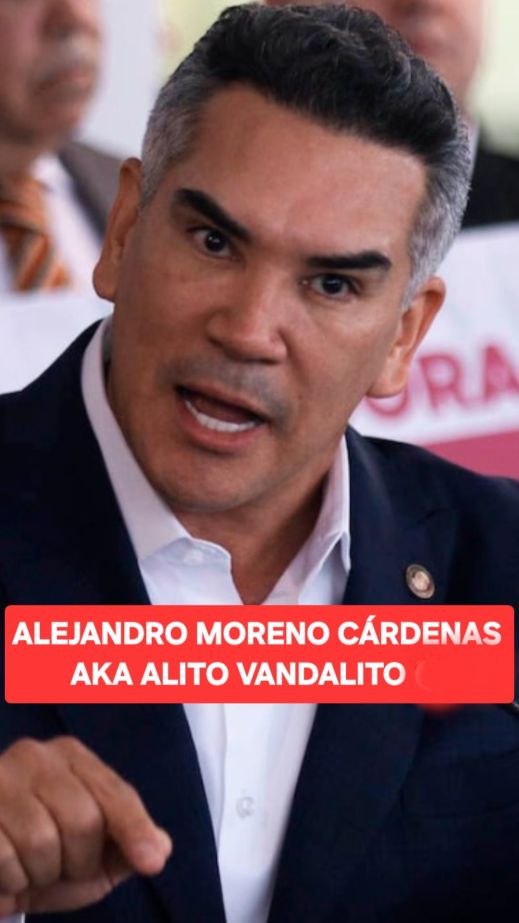
En la política mexicana, las coincidencias suelen operar con una precisión casi matemática. Justo cuando la Sección Instructora de la Cámara de Diputados se alista para definir su nueva presidencia y avanzar en el proceso de desafuero contra Alejandro “Alito” Moreno Cárdenas, el dirigente nacional del PRI cumple semanas fuera del país.
Mientras en San Lázaro se alistan los dictámenes derivados de las investigaciones presentadas por las autoridades de Campeche, el senador priista permanece en Estados Unidos bajo el argumento de cumplir con una agenda diplomática y denunciar presunta persecución política. Sin embargo, ante la opinión pública el escenario proyecta algo muy distinto: el intento de evadir la acción de la justicia.
El expediente en San Lázaro: 83.5 millones de pesos bajo la lupa
El procedimiento para retirar la inmunidad procesal al líder priista no es una disputa meramente mediática.
El expediente integra carpetas de investigación por presuntas irregularidades cometidas durante su gestión como gobernador de Campeche, cuyo monto asciende a 83.5 millones de pesos.
Entre los rubros bajo investigación destacan:
Simulación de contratos y servicios en dependencias estatales de seguridad pública.
Sobrecostos y contrataciones irregulares en materia de publicidad e imagen institucional.
Transferencias a empresas fachada y consultorías sin justificación operativa demostrable.
A este panorama se suma la detención de exfuncionarios y colaboradores cercanos a su administración, lo que reactivó la presión en el Congreso.
La presidencia de la Sección Instructora dejó listo un proyecto de dictamen respecto a la admisibilidad del proceso de desafuero antes del cambio de mesa directiva.
¿Victimización internacional o evasión de la ley?
Posicionar un viaje al extranjero como una «gira en defensa de las instituciones» resulta insostenible cuando en el país de origen existe un trámite legal en curso para retirar el fuero constitucional.
Cuando un actor político argumenta ser víctima de persecución, la estrategia más sólida para desmontar cualquier acusación es presentarse ante las autoridades, aportar pruebas y enfrentar el proceso con transparencia. Buscar foros internacionales o la atención de organismos extranjeros mientras se posterga indefinidamente el regreso a México no construye una imagen de fortaleza, sino de temor ante la pérdida de la protección parlamentaria.
«Quien sostiene no haber cometido delito alguno no necesita poner fronteras de por medio para demostrar su inocencia.»
Conclusión: El fuero no es patente de impunidad
El fuero constitucional fue diseñado para garantizar la libertad de expresión y el trabajo legislativo, no para funcionar como un escudo frente a investigaciones por presunto desvío de recursos públicos. Alejandro Moreno tiene la obligación ética y legal de regresar a México, responder ante las instancias correspondientes y aclarar el destino de los recursos señalados.
Continuar en el extranjero solo consolida la percepción generalizada de que no se trata de diplomacia ni de resistencia política, sino de una huida calculada ante el avance de la ley.
Me siento muy orgullosa de vivir en México y, sobre todo, en estos tiempos en que la presidenta Claudia Sheinbaum lidera mi país. Ella es la primera mujer que encabeza las fuerzas armadas de México, y vaya que lo hace mucho mejor que bastantes presidentes varones que han gobernado.
Ella es fuerte, tranquila pero segura de sí misma, fuerte pero compasiva, muy inteligente pero nada creída, elegante pero humilde, en fin, una verdadera dama que da ejemplo al mundo de fortaleza y serenidad. Muchos presidentes la admiran y envidian porque tiene la aceptación del 74 por ciento de la población mexicana.
Sunset and evening star,
And one clear call for me!
And may there be no moaning of the bar,
When I put out to sea,

But such a tide as moving seems asleep,
Too full for sound and foam,
When that which drew from out the boundless deep
Turns again home.

Twilight and evening bell,
And after that the dark!
And may there be no sadness of farewell,
When I embark;

For though from out our bourne of Time and Place
The flood may bear me far,
I hope to see my Pilot face to face
When I have crossed the bar.
‘It matters not what you think,’ Hitchens wrote, ‘but how you think.’ Many assume Hitchens was such a pugnacious debater and polemicist because he was temperamentally inclined toward rhetorical combat. As Amis put it: ‘He likes the battle, the argument, the smell of cordite.’ This is true, but another source of Hitchens’s ferocity in print and on the stage was the fact that his positions were natural extensions of his core principles. It is easier to hold and defend a controversial position when you have internally coherent reasons for doing so.
What you think – or at least what you purport to think – tends to matter more than how you think these days. The best path toward a lucrative career as a political or cultural commentator is the development of a brand that serves a particular set of information consumers. There are plenty of fiery pundits and Twitter warriors out there today, but how many reliably outrage and alienate their own ‘side’? How many are willing to publish an article or a podcast that will result in a loss of followers and prestige within the group?
«After I recovered in 2006, I was healthy for ten years. I thought I had this depression thing whipped. I went on to have a successful and demanding career. First, I was the chief health lobbyist for AARP during the passage of the Affordable Care Act. Then, after a stint at the Department of Health and Human Services, I became the executive director of the White House Conference on Aging under President Obama. When applying for security clearance for the White House job, the questionnaire asked whether I had been hospitalized for a psychiatric condition in the past seven years. Luckily for me, it had been more than seven years since my hospitalization when I applied, but I have friends with mental health conditions who have been denied security clearance. Even worse, I know people who refuse to be treated for their mental health conditions because they fear it will negatively affect their security clearances and, thus, their ability to qualify for high-level positions.«
«Over my career, I have received recognition for my hard work and dedication to health and long-term care policy. Close friends have told me that they are surprised to learn that I have ever suffered from depression. I’m friendly and approachable—I don’t meet the stereotype associated with people living with depression as sad, angry, and withdrawn.«
«In 2016 I left the White House to join a small nonprofit organization. I loved working in government, but as a political appointee, many friends and colleagues counseled me to leave so that I could return to a government position if Hillary Clinton was elected. Similar to 2005, I was burning the candle on both ends: I was writing countless grant proposals, overseeing a large team, and volunteering for many social causes and campaigns. The 2016 election was much more polarizing than any I’ve experienced. Most people did not expect Donald Trump to win—including me. The election results caused me to crash after months of building anxiety.»
«Once again I spiraled downward. I couldn’t get out of bed. I couldn’t work. I had thoughts of harming myself. This time, my husband urged me to start ECT much sooner in the cycle, and once again, it worked. Within a matter of weeks, I was back at work, pretending nothing had happened. I kept pushing myself harder to show everyone that I was “normal.” I thought I had a pattern: I would function at a high level for many years and then my depression would be triggered by a significant event. I thought I’d be healthy for another ten years.«
«But I started feeling signs of depression again only a year later. From my health services research, I knew that my diagnosis, major depressive disorder, can be triggered by a major event that prompts a person to recall previous traumatic experiences (for instance, my mother’s death when I was very young). During an episode, I am unable to function and have so little energy that even small tasks take extra effort. Many others suffer from persistent depressive disorder, which refers to a low mood that lasts for at least two years. Many people with a persistent depressive disorder are able to function day to day but feel low most of the time. I also learned that depression is highly recurrent, with at least 50 percent of those who recover from a first episode having one or more additional episodes in their lifetime, and 80 percent of those with a history of at least two episodes having another recurrence, according to the literature. So I know that this illness may be with me for a long time.«
Not Alone
«In 2018 two celebrities, Kate Spade and Anthony Bourdain died by suicide in close succession. Several news articles described how selfish they were for taking their own lives. Journalists questioned how someone who was so successful and admired could do this. In reading these articles, I knew that the writers didn’t really understand depression. They didn’t get how it takes over your mind and distorts your thoughts. Depression convinces you that everyone around you would be better off if you were dead. You are a burden, a disappointment, and incapable of functioning. In addition, many people judge those with depression. If they would only exercise more, meditate, see a therapist, take their meds, and so on, they wouldn’t be depressed. But I did everything that was recommended. I exercised nearly every day. I meditated and saw a therapist regularly. I took my antidepressants. Still, I got depressed again. And I’m still struggling to accept the fact that it is not my fault.»
«I’ve observed that many high-achieving people experience bouts of major depression, but we generally hide it from others. Our expectations for ourselves are high, and when we can no longer perform at such intense levels, depression convinces us that we are failures and worthless. So, in the wake of these deaths, I decided to speak out.«
«I share my own experience in the hope that I can help people better understand depression and—more important—give those living with depression hope that they can recover. I also aim to raise awareness of stigma and recovery surrounding mental health issues. As part of my efforts, I work as a network leader with the Stability Network, a growing movement of people living and working with mental health conditions. We share our stories to inspire others and change how people think about mental health. Our message is one of hope and recovery.«
Nora Super is a healthcare practitioner who has decided to share her longtime battle with depression. I applaud her for being open about this mental health problem affecting millions of people worldwide. This is how it began:
«I had my first episode of major depressive disorder in 2005 at the age of forty-one. I had been under a tremendous amount of stress, having just gone through a divorce. I was also going to grad school while simultaneously working full-time and raising two young daughters. I wasn’t sleeping well and had been feeling increasingly anxious and sad. Then Hurricane Katrina hit. Although I had lived in the Washington, D.C., area for more than twenty years, New Orleans is my hometown—I still have relatives who live there and great affection for the city and its unique culture.»
«I was devastated to see people suffering in squalid conditions in the Louisiana Superdome. I could not fathom why we could not get water and food to people in an American city when we could airdrop necessities in war-torn countries across the globe. I felt as if my city had been abandoned. I couldn’t think straight. My thoughts went round and round in a spiral. I had less and less energy and was unable to concentrate on my work. Eventually, I couldn’t get out of bed in the morning, and it took a tremendous amount of energy just to take a shower. My distorted mind convinced me that my family would be better off if I were dead, and I came up with detailed plans for how I would end my life. Over the course of six months, I was hospitalized five times».
«I tried a variety of antidepressants, gradually increasing the potency of the drugs. I saw a therapist and psychiatrist regularly. I participated in cognitive behavioral group therapy. Still, I sank further into depression. Finally, a physician friend recommended electroconvulsive therapy or ECT. This therapy had gotten a bad rap over the years, especially in One Flew Over the Cuckoo’s Nest, which portrayed it as a punitive, painful treatment. Mental health professionals told me stories about how, in the past, ECT often had been given to patients in psychiatric wards without their consent, without anesthesia, and with severe adverse effects. But others told me that it was now safe and extremely effective.»
«I was reluctant. However, as I had been unable to work for more than six months and knew that my family was deeply worried about me, I decided to give it a try. It ended up saving my life.»
«My ECT was performed as an outpatient procedure, as is generally the case. The actual procedure took about five minutes. I received general anesthesia and muscle relaxers, and electrodes were placed on my scalp. Low-intensity electrical impulses were then emitted to create a brief, controlled seizure that affected the neurons and chemicals in my brain. Treatments are generally given three times a week until the symptoms are in remission, and they may be spaced out over months as maintenance therapy.»
«It was as if my brain was jump-started. It made me feel better almost immediately, and I felt nearly recovered by the fourth treatment.»
«ECT is one of the most effective treatments for severe depression. Yet this is the first time I’ve publicly admitted that I’ve received the treatment because of the stigma associated with it. Mental illness is stigmatized in general, and ECT is so stigmatized that many people are afraid to even mention the treatment that helped them get better. Why are those of us who’ve received it so reluctant to talk about it? No one is ashamed of receiving chemotherapy or immunotherapy. Yet in addition to the negative media impressions about ECT, mental health professionals still portray it as a “last resort” for those with “treatment-resistant” depression. I am left feeling as if it’s my fault that I need it—and ashamed for being suicidal—when I should be shouting to the world about the benefits, for me, of this treatment.»
<br>Wer ist der wahre eigentümer/schöpfer des herzens ? Gott gibt nur das Herz, du füllst es. Achtung. Was füllst du? Denn dann musst du es leeren. beschmutze nicht dein herz. Allah weiß auch, was in den Tiefen der Herzen ist. Alles was schön ist… Seele, Herz, Liebe, Glaube… Wer Kämpft, kann Verlieren. Wer nicht Kämpft, hat schon Verloren. Lebe jeden Tag deines Lebens, als wäre es dein letzter. Also wirst du eines Tages Recht haben"
Hermanus Website Designers, we specialise in developing WordPress websites like online stores, estate agencies, accommodation sites, business sites and more.









 Dra. Martha Andrea Castro Noriega, MD