anxiety disorder dra martha castro noriega tijuana baja california usa states
inspiration, mental health

Learn How to Read Your Body Signals to Avoid Anxiety and Be Happier

LEARN HOW TO READ BODY SIGNAL TO AVOID ANXIETY

Take a deep breath. …

Get active. …

Sleep well. …

Challenge an anxious thought. …

Say an encouraging statement. …

Stay connected to others. …

Avoid caffeine. …

Avoid mind-altering substances.
anxiety disorder dra martha castro noriega tijuana baja california usa states

The ability to perceive the signals of your body is known as interoceptive accuracy (IAc). There are, different psychosomatic cues that you pick up within yourself during states of anxiety. But above all, a beating heart is the hardest one to ignore.

anxiety disorder dra martha castro noriega tijuana baja california usa states

It’s for this reason that heartbeat perception, as brain scientists call it, is a direct proxy for measuring people’s IAc and reported anxiety and stress levels.

IAc and a beating heart

Having the ability to accurately detect your own heartbeat is critical for reappraising your anxiety on a moment to moment basis. We know that anxiety is as much in the body as it is in the mind, and that a (mis)perception of a fast heart rate can easily contribute to the catastrophization of a panicked state.

anxiety disorder dra martha castro noriega tijuana baja california usa states

It’s why some of the most effective anxiety-related therapies, like progressive muscle relaxation and deep breathing, tend to focus on muting a physiological response followed by a cognitive reappraisal technique.
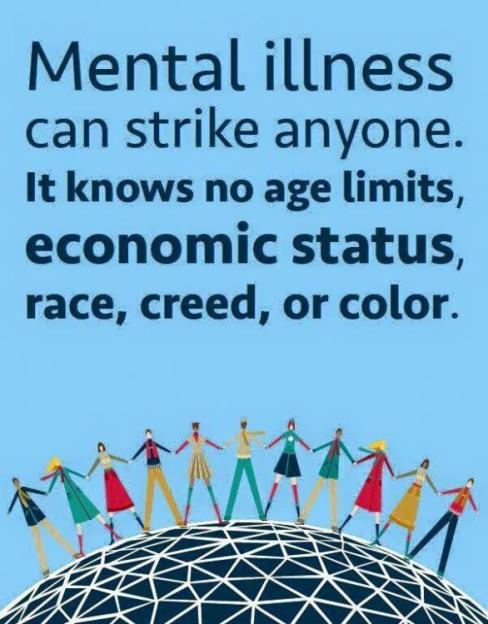
anxiety disorder dra martha castro noriega tijuana baja california usa states

What this says is that your ability to detect and therefore modulate your bodily responses during an anxious state is not fixed. These signals are amenable to change. You can learn to more accurately perceive your beating heart in a high-stress environment. You can apply reappraisal techniques in mitigating your anxiety.

The findings of this study have the potential to inform research on stress and anxiety management. For example, having a general idea of how much your IAc is dependent on biological predisposition could provide leeway to pharmaceutical interventions to help combat debilitating responses to stressful situations.

For now there’s therapeutic power in knowing you can improve your IAc and work towards minimizing your anxiety.

“If you believe in yourself, everything is possible. Live the life of your dreams. Let it be!”—dramacn

Dr. Martha Castro Noriega, MD

Cats, Gatos

When One of our Cats Dies….

When my cat Andie died last December 13 2017. I felt that my heart was life and heart were completely broken. I couldn’t understand how my life was going to be worth living without her. She was so kind and loving to me, all the time, even when I gave her intramuscular shots and oral medications; she never run away from me, she loved me so  and losing her has been very painful….NO…extremely painful to me. It is an unimaginable pain missing her everyday. There was a special connection between Andie and me, and yes, that connection will never die.

Through out my 32 years of having cats in my life I have lost several through old age, some sudden acute disease and they all have been loved and rescued cats. They all leave a hole in my heart when they die.
Anyways, I read this beautiful post of Milly Schmidt and decided not to be ashamed of showing my own pain and my vulnerability to suffer like every one else in this world and share some of my own grieve with you by reblogging her post.

When my cat died on March 20th, I stopped blogging entirely. The only reason you’ll see I posted blogs on that particular date (and after) is because I always schedule my blogs about 1-2 weeks ahead.

I would like to let you all know that I have been reading every single comment left on this blog – even if I never replied. Your comments have been little sparks of light in the darkness. Thank you too, for all the lovely, heartfelt emails and for being so understanding and sharing in my grief when I posted about losing Sven last month.

I’m not embarrassed to admit, that I, the ever optimistic happy go-lucky crazy cat lady, finally reached the end of her tether after my pet died. And we should not be ashamed of feeling sad. If we do, we help perpetuate the stigma of depression that stops people reaching out for help.

It’s okay to ask for help. It’s okay to let others know that you’re not coping well.

For me, I think the problem was, no matter how lousy I was feeling, my dog and cat would always be there for me, so to lose one of my constant companions has been absolutely devastating. I have never needed Sven more than I need him now, yet he’s lost to me forever.

I usually feel pretty happy most of the time, but when Sven died, any sparks of happiness vanished along with him. It took a few weeks before I could look at a sunrise and feel that rush of appreciation and contentment I used to feel. But even then, I knew that something was still not right.

I think I recognized I was getting to a point where I couldn’t handle the grief any longer. I needed some cats around to force me to laugh. I mean… how can you not laugh when you see a face like this??

Via The Magic of Pets — The Cat’s Write